
Treatment course6 min read
Non-surgical treatment of cervical radiculopathy
The first approach in cervical radiculopathy is conservative and sufficient for most patients. The programme aims to reduce mechanical load on the nerve root, allow time for the inflammatory response to resolve, and preserve function meanwhile.
Acute phase: reducing load
The first target is finding positions that reduce pressure on the nerve root. Supporting the arm and an appropriate sleeping arm position markedly reduce night pain.
The range the nerve root tolerates is identified and work stays within it. Movements that radiate pain into the arm are temporarily limited.
Cervical traction can relieve symptoms in selected patients by widening the nerve exit canal. Its effect varies between individuals; the response at first application decides whether to continue.
Nerve mobility and mobilisation
The nerve tissue's capacity to glide along the arm is assessed and gentle nerve gliding work applied. This reduces tension on the nerve.
Application stays below the intensity that produces pain. When nerve tissue is strained, symptoms can increase hours later, so load is progressed very gradually.
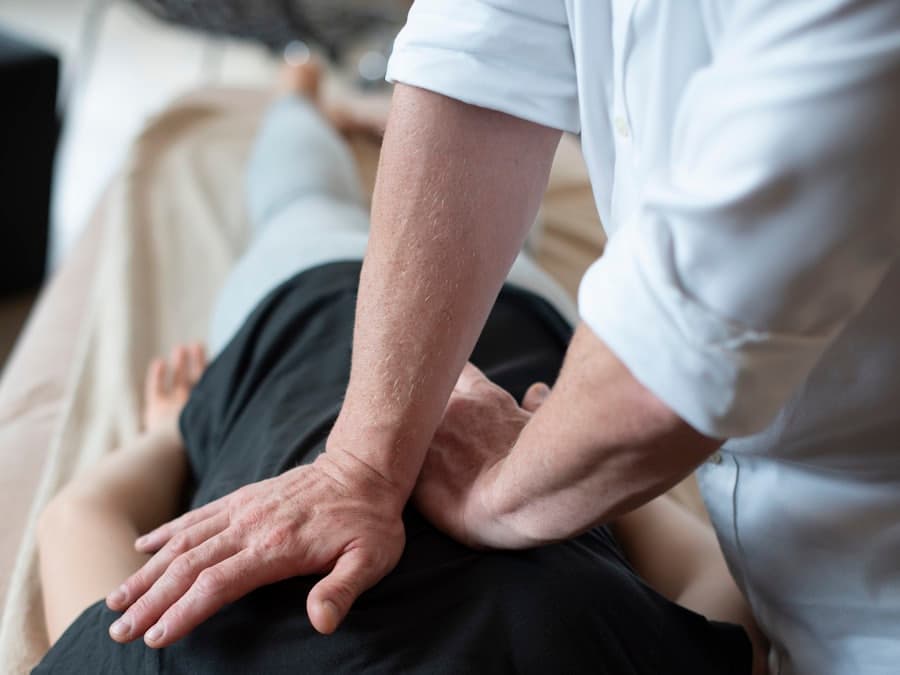
Mobilisation of the upper thoracic and cervical segments increases neck range and reduces mechanical load on the nerve.
Strengthening and timeline
As pain settles, the deep neck flexors and scapular stabilisers are strengthened. These muscles carry the head and shoulder girdle and reduce load at the nerve exit.
Where there is arm weakness, the affected muscle group is trained specifically. Preserving muscle mass while the nerve heals speeds functional return.
A clear reduction in symptoms is usually seen within six to twelve weeks. Radiating pain generally recedes first; numbness is the last symptom to resolve and can take months.
Key points
- Most patients recover without surgery.
- An appropriate arm position markedly reduces night pain.
- Nerve gliding work stays below pain-producing intensity.
- When nerve tissue is strained, symptoms can increase hours later.
- Numbness is the last symptom to resolve and can take months.
Frequently asked questions
Should I use a collar?
Routine use is not advised. It can be used briefly for a few days in very severe acute pain; prolonged use reduces muscular endurance and delays recovery.
Is traction suitable for everyone?
No. It can increase symptoms in some patients. The response at first application is assessed; if symptoms rise, the method is discontinued and the programme continued with other components.
When is surgery needed?
Progressive weakness, signs of cord compression, or pain persisting despite six to twelve weeks of appropriate treatment and limiting daily life are grounds for surgical assessment.
Related articles
- Diagnosis and symptoms· 6 min readPain radiating from neck to arm: what is cervical radiculopathy?
- Exercise· 6 min readExercise for arm-radiating neck pain: how to approach nerve tissue
- Treatment decision· 6 min readWhen is surgery needed for arm-radiating neck pain?
- Daily living· 6 min readSleeping position and daily routine in arm-radiating neck pain
Other topics in the same region
- Diagnosis and symptoms· 6 min readCervical disc herniation symptoms: what arm pain means
- Diagnosis and symptoms· 6 min readWhat is cervical flattening and what does it mean on an X-ray?
- Diagnosis and symptoms· 6 min readTension-type headache: symptoms and how it differs from migraine
- Diagnosis and symptoms· 6 min readWhat is cervical spondylosis? Is neck arthritis serious?
Articles of a similar kind
- Treatment course· 7 min readNon-surgical treatment for a lumbar disc herniation: how the process works
- Treatment course· 6 min readNon-surgical cervical herniation treatment: stages and timeline
- Treatment course· 6 min readTreating cervical flattening: the target is endurance, not the angle
- Treatment course· 6 min readScoliosis treatment: exercise, bracing and the monitoring decision
This content is for information only and does not replace medical diagnosis or treatment. Response to treatment varies between individuals. Please consult a healthcare professional about your symptoms.