
Exercise6 min read
Exercise for arm-radiating neck pain: how to approach nerve tissue
Exercise in cervical radiculopathy is built on a different logic from muscle programmes. Nerve tissue does not respond to strain like muscle, and overloading can increase symptoms hours later. Progression is therefore planned very gradually.
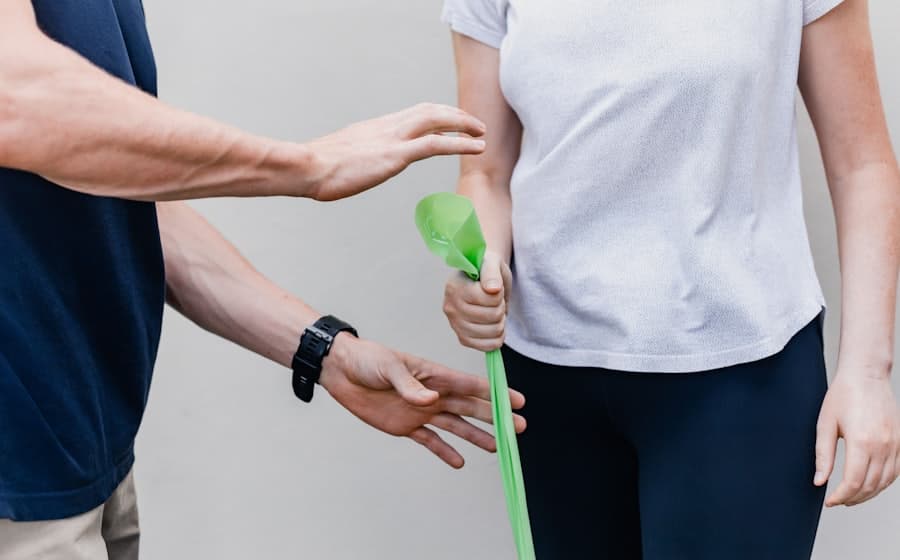
Nerve gliding work
Nerve gliding does not stretch the nerve but lets it move freely within surrounding tissue. Tension increases at one end while it is reduced at the other, so the nerve moves without being stretched.
It is applied with few repetitions and short durations. Five to ten repetitions suffice for most patients; more risks increasing symptoms.
Mild tingling during the work is normal. A marked increase in arm pain, or symptoms lasting hours afterwards, indicates excessive load.
Neck and scapular work
Deep neck flexor training begins once pain has settled. When these muscles carry the head, load on the cervical segments falls and the nerve exit is eased.
Strengthening the scapular stabilisers corrects shoulder girdle position. As scapular control improves, tension along the nerve pathway between neck and arm reduces.
Thoracic mobility is opened up. Stiffness in the upper back disturbs head and shoulder position and indirectly increases load on the nerve.
What to avoid
Forcing the neck backward and toward the affected side narrows the nerve exit canal and increases symptoms. This movement is particularly avoided in the acute phase.
Lifting weight overhead and holding the arm up for long periods increase load on the nerve. These activities are postponed until symptoms recede.
Forced arm stretches strain nerve tissue. If the stretch sensation spreads down the whole arm with tingling, the work should be eased.
Key points
- Nerve gliding moves the nerve rather than stretching it.
- Five to ten repetitions suffice for most patients.
- Symptoms lasting hours afterwards indicate excessive load.
- Bending the neck backward and toward the affected side increases symptoms.
- Overhead lifting is postponed until symptoms recede.
Frequently asked questions
Is tingling during exercise normal?
Mild tingling that settles quickly after the work is normal. If it intensifies, spreads or lasts hours, the load should be reduced.
How often should I do it?
Nerve gliding is done two to three times a day in short sets. Neck and scapular strength work once a day is sufficient.
When can I return to weight training?
Return is gradual once radiating pain has resolved and arm strength approaches the other side. Overhead movements are added last.
Related articles
- Diagnosis and symptoms· 6 min readPain radiating from neck to arm: what is cervical radiculopathy?
- Treatment course· 6 min readNon-surgical treatment of cervical radiculopathy
- Treatment decision· 6 min readWhen is surgery needed for arm-radiating neck pain?
- Daily living· 6 min readSleeping position and daily routine in arm-radiating neck pain
Other topics in the same region
- Diagnosis and symptoms· 6 min readCervical disc herniation symptoms: what arm pain means
- Diagnosis and symptoms· 6 min readWhat is cervical flattening and what does it mean on an X-ray?
- Diagnosis and symptoms· 6 min readTension-type headache: symptoms and how it differs from migraine
- Diagnosis and symptoms· 6 min readWhat is cervical spondylosis? Is neck arthritis serious?
Articles of a similar kind
- Exercise· 7 min readDisc herniation exercises: which help and which to avoid
- Exercise· 6 min readCervical herniation exercises: what is safe and what to avoid
- Exercise· 6 min readExercises for cervical flattening: what actually works
- Exercise· 6 min readScoliosis exercises: why one programme does not fit everyone
This content is for information only and does not replace medical diagnosis or treatment. Response to treatment varies between individuals. Please consult a healthcare professional about your symptoms.