
Exercise6 min read
Exercises for cervical flattening: what actually works
Most exercises recommended for cervical flattening are stretches. Stretching is relieving but does not increase the muscle's capacity to carry load, so tension returns within days. Lasting change comes from endurance work.
The core exercise: the chin tuck
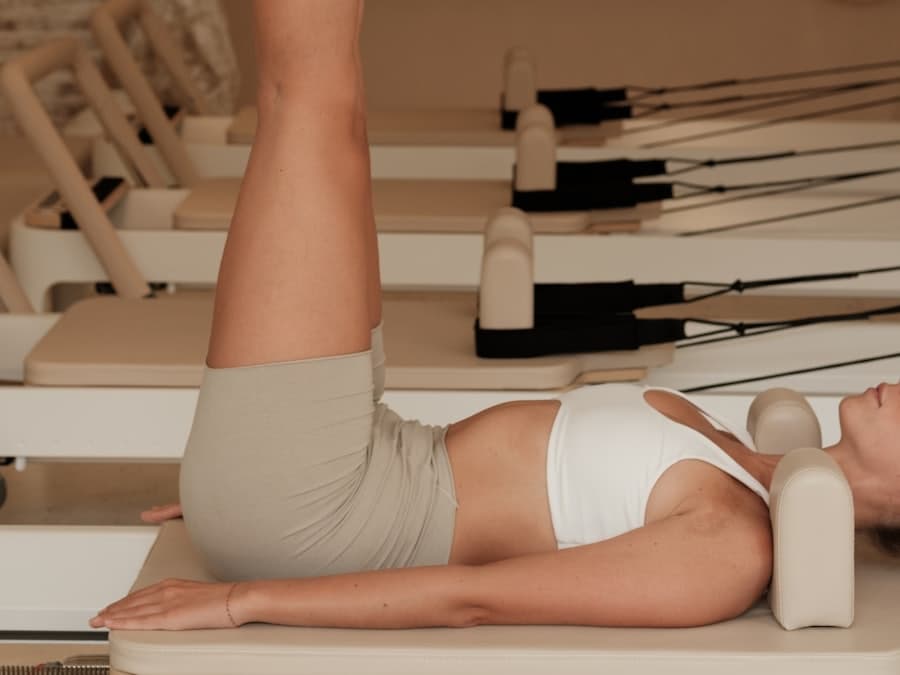
Lying supine, the chin is gently tucked; the head does not lift from the pillow and the movement is small. The aim is to work the deep muscles at the front of the neck, and it is critical that the surface muscles do not engage.
Done correctly there is a mild sense of work at the front of the neck; if there is hardening under the chin or obvious contraction at the sides, the superficial muscles are dominating and the movement is eased.
Begin with ten-second holds for ten repetitions, extending duration gradually over weeks. No weight is added; progression comes from time.
Scapular work and thoracic mobility
The muscles that draw the shoulder blade back and down are strengthened. As they engage, the upper trapezius no longer has to work continuously and the sense of tension across the shoulders recedes.
Extension and rotation range in the thoracic spine are increased. When the upper back stiffens, the head shifts further forward — a neck programme is not complete without addressing it.
Self-mobilisation of the upper back with a foam roller is taught at this stage and continued at home.
Common mistakes
Forcing the neck backward is often recommended to 'restore the curve', but it compresses the upper cervical segments and can trigger headache. Work stays controlled and within the pain-free range.
Constantly trying to hold an upright posture is also tiring and usually increases pain. The aim is not to force one position but to be able to change position through the day.
Rather than one long session a day, short and frequent application works better. One minute every hour at a desk produces better results than twenty minutes in the evening.
Key points
- Stretching relieves but does not increase the muscle's load capacity.
- In the chin tuck, progression comes from duration rather than load.
- If the superficial muscles engage, the movement is eased.
- A neck programme is not complete without working thoracic mobility.
- Short, frequent application beats one long daily session.
Frequently asked questions
Will the exercises correct the curve?
Where flattening is due to muscle spasm, the curve usually returns. In structural flattening the angle largely stays the same, while pain, tension and range of motion improve markedly.
How soon is a difference noticed?
A reduction in tension is usually noticed within two to three weeks. Measurable gains in endurance and a clear reduction in pain take six to eight weeks.
Are swimming or pilates enough?
Both are beneficial for general conditioning and posture but do not specifically target the deep neck flexors. They do not replace that specific exercise, though continuing them alongside is appropriate.
Related articles
- Diagnosis and symptoms· 6 min readWhat is cervical flattening and what does it mean on an X-ray?
- Treatment course· 6 min readTreating cervical flattening: the target is endurance, not the angle
- Treatment decision· 6 min readIs cervical flattening serious? When assessment is needed
- Daily living· 6 min readDesk setup and daily habits in cervical flattening
Other topics in the same region
- Diagnosis and symptoms· 6 min readCervical disc herniation symptoms: what arm pain means
- Diagnosis and symptoms· 6 min readTension-type headache: symptoms and how it differs from migraine
- Diagnosis and symptoms· 6 min readPain radiating from neck to arm: what is cervical radiculopathy?
- Diagnosis and symptoms· 6 min readWhat is cervical spondylosis? Is neck arthritis serious?
Articles of a similar kind
- Exercise· 7 min readDisc herniation exercises: which help and which to avoid
- Exercise· 6 min readCervical herniation exercises: what is safe and what to avoid
- Exercise· 6 min readScoliosis exercises: why one programme does not fit everyone
- Exercise· 6 min readExercise for a meniscus tear: sequence and safe progression
This content is for information only and does not replace medical diagnosis or treatment. Response to treatment varies between individuals. Please consult a healthcare professional about your symptoms.