
Exercise6 min read
Exercise for a meniscus tear: sequence and safe progression
The most common error in exercise after a meniscus tear is skipping stages. The programme advances in three steps, each laying the ground for the next to be applied safely.
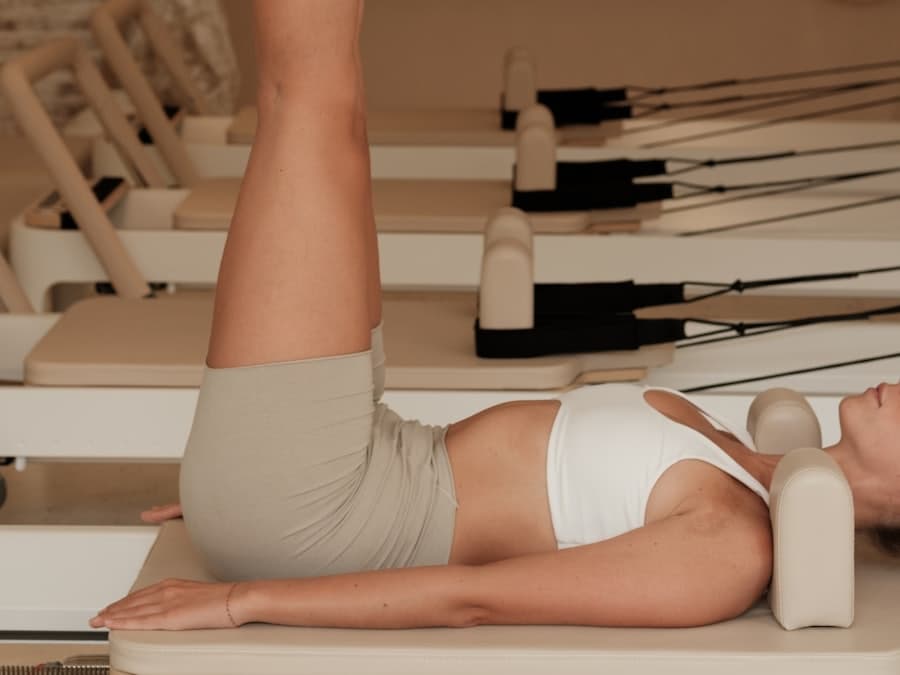
Step one: activation and range
The first target is re-engaging the quadriceps. As swelling reflexively inhibits it, activation is re-established with straight-leg raises and isometric holds.
Full knee extension is preserved in the same period. Lying prone and letting the knee hang free is a simple, effective way to prevent extension loss.
No load is added at this stage. The aim is not to gain strength but to restore the muscle's signal and maintain full joint range.
Step two: strength and hip control
Once activation is established, closed-chain work begins. Wall sits and controlled partial squats load the knee within a safe range.
Strengthening the hip muscles is the most frequently skipped and most decisive part of the programme. Without adequate hip control the knee drifts inward with each step and load on the meniscus rises.
Load is increased according to the pain response. Pain not rising markedly during exercise or the following day is the most practical sign the load is appropriate.
Step three: balance and return to function
Single-leg balance work re-establishes position sense in the joint. As the meniscus contributes to that sense, this component must be trained after a tear.
Change of direction and preparation for controlled hopping follow. In those aiming to return to sport, skipping this stage raises the risk of re-injury.
The return decision rests on criteria rather than time: full pain-free range, strength reaching at least ninety per cent of the other leg, and a controlled single-leg test. Full load is not resumed before all three.
Key points
- The programme advances in three steps; skipping one produces pain.
- The first target is regaining quadriceps activation, not strength.
- Full knee extension must be preserved early on.
- Hip strength directly reduces the load reaching the knee.
- Return to sport is planned by criteria, not by time.
Frequently asked questions
Can I cycle?
Usually yes. A stationary bike with low resistance and a high saddle is suitable even early on; it supports joint movement and reduces swelling.
Are squats forbidden?
Not a permanent prohibition. Deep squatting is avoided early on; as strength develops the range is progressively widened and most patients return to full squatting.
Should I stop if I feel pain?
Mild discomfort that settles quickly after exercise is acceptable. Sharp pain, swelling that increases afterwards, or pain carrying into the next day indicates excessive load, and the programme is eased.
Related articles
- Diagnosis and symptoms· 6 min readMeniscus tear symptoms: which findings distinguish it
- Treatment course· 6 min readHow effective is non-surgical treatment for a meniscus tear?
- Treatment decision· 6 min readIs meniscus surgery necessary? What the decision rests on
- Daily living· 6 min readStairs, squatting and daily movement with a meniscus tear
Other topics in the same region
- Diagnosis and symptoms· 6 min readWhat is a Baker's cyst and what are its symptoms?
- Diagnosis and symptoms· 6 min readKneecap pain: what is patellofemoral pain syndrome?
- Diagnosis and symptoms· 6 min readRunner's knee: what is pain on the outer side of the knee?
- Diagnosis and symptoms· 6 min readJumper's knee: what is pain below the kneecap?
Articles of a similar kind
- Exercise· 7 min readDisc herniation exercises: which help and which to avoid
- Exercise· 6 min readCervical herniation exercises: what is safe and what to avoid
- Exercise· 6 min readExercises for cervical flattening: what actually works
- Exercise· 6 min readScoliosis exercises: why one programme does not fit everyone
This content is for information only and does not replace medical diagnosis or treatment. Response to treatment varies between individuals. Please consult a healthcare professional about your symptoms.