
Treatment course6 min read
Manual therapy and thoracic mobilisation for upper back pain
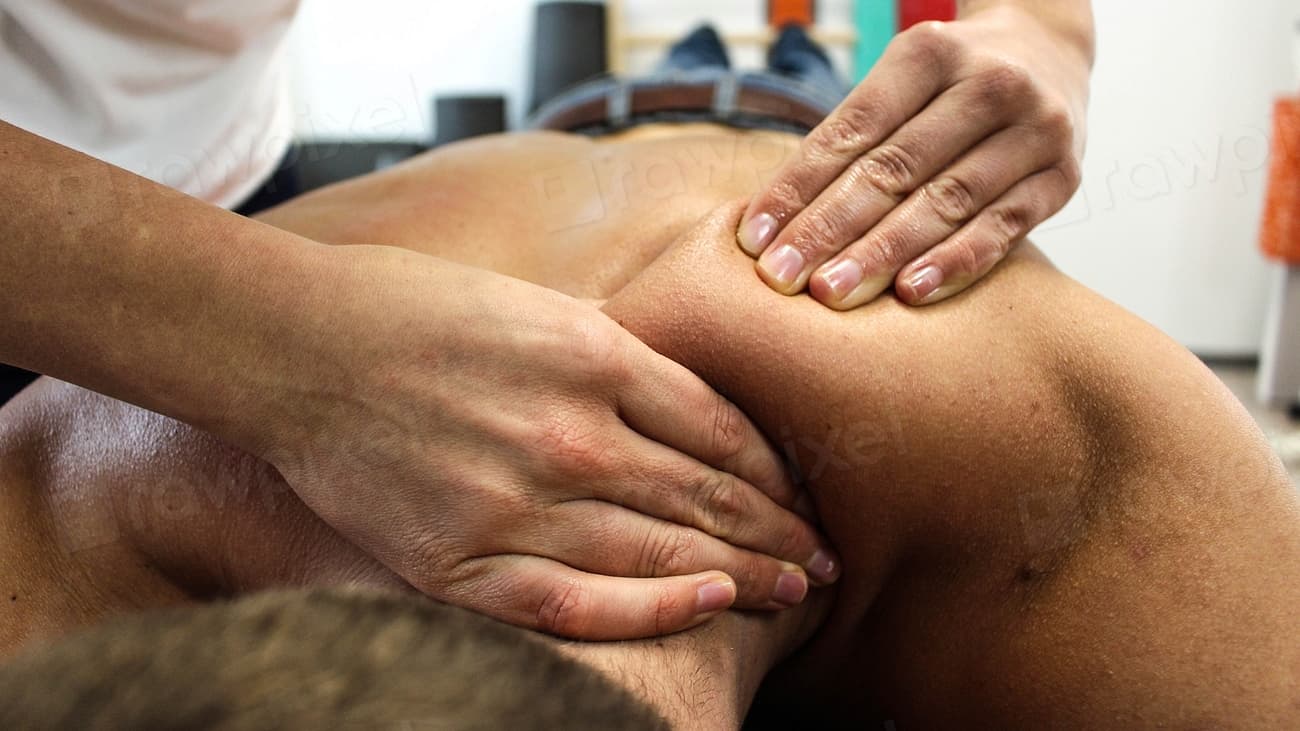
Thoracic mobilisation is a hands-on technique applied to stiffened segments of the upper spine and to the rib joints. Its scope is not limited to upper back pain; it is a regular part of programmes for neck and shoulder complaints too.
How it is applied
With the patient prone or supine, the stiffened segment is identified and rhythmic, controlled pressure applied at that level. Intensity is graded to patient tolerance.
The rib joints are worked separately. Vertebral and rib movement are linked in this region, and targeting the vertebra alone usually falls short.
Breathing is used during application. The rib spaces narrow on the out-breath and mobilisation is more effective in that phase.
Which complaints it is used for
Its most direct application is mechanical upper back pain concentrated between the shoulder blades. The response is rapid where segmental stiffness is found.
Thoracic mobilisation is a regular part of programmes for neck pain and tension-type headache. As the upper back opens, less movement is demanded of the neck.
It is also used in shoulder impingement. As thoracic extension increases, the angle demanded of the shoulder joint to raise the arm falls.
Session plan and integration with exercise
In the first hours after application the upper back moves through a wider range. Exercise done in that window makes the gain lasting.
A home programme is given from the first session. Foam roller extension and four-point rotation are the core exercises continued at home.
Session frequency starts at twice weekly and reduces to once with progress. The programme is usually completed in four to eight sessions.
Key points
- Thoracic mobilisation is part of neck and shoulder programmes too.
- Vertebral and rib movement are linked; targeting the vertebra alone falls short.
- Mobilisation is more effective on the out-breath.
- The first hours after application are most productive for exercise.
- The programme is usually completed in four to eight sessions.
Frequently asked questions
Is a sound during treatment normal?
Sounds are common in this region and harmless, arising from a pressure change within the joint. They are not a marker of success, and the intended effect is achieved without them.
Can it be applied with osteoporosis?
The technique changes. High-intensity techniques are not applied in advanced osteoporosis; gentle mobilisation and exercise are preferred. Bone density information should be shared at the first session.
Is it sufficient alone?
No. Range that is opened closes again within days if unused. Durability comes from exercise begun in the same session and continued at home.
Related articles
- Diagnosis and symptoms· 6 min readWhy does the upper back stiffen? What loss of thoracic movement means
- Exercise· 6 min readThoracic mobility exercises: a programme you can do at home
- Treatment decision· 6 min readUpper back pain: which route to take, and the decision criteria
- Daily living· 6 min readPreserving thoracic mobility: what can be done during the day
Articles of a similar kind
- Treatment course· 7 min readNon-surgical treatment for a lumbar disc herniation: how the process works
- Treatment course· 6 min readNon-surgical cervical herniation treatment: stages and timeline
- Treatment course· 6 min readTreating cervical flattening: the target is endurance, not the angle
- Treatment course· 6 min readScoliosis treatment: exercise, bracing and the monitoring decision
This content is for information only and does not replace medical diagnosis or treatment. Response to treatment varies between individuals. Please consult a healthcare professional about your symptoms.