
Exercise6 min read
Kyphosis exercises: what each movement corrects
Most exercises recommended for kyphosis are back strengthening alone. With a stiff upper back and a shortened chest wall, however, strengthening does not produce the intended straightening. Sequence matters.
Step one: mobilising the back
A foam roller is placed across the upper back and controlled extension worked. The abdomen is held lightly engaged so the lower back does not arch.
Thoracic rotation done seated or in four-point kneeling increases range. Rotation is the direction most often lost alongside kyphosis.
This stage is short and done once a day. The aim is not to force but to gain the range the later work requires.
Step two: opening the chest
A doorway chest stretch opens the shortened structures pulling the shoulders forward. The stretch is held thirty seconds and stays within the pain-free range.
Lying supine over a rolled towel placed lengthwise along the spine opens the rib cage with gravity. Five minutes brings clear relief at the end of the day.
Stretching alone does not last. Preserving the space opened depends on the muscular control in step three.
Step three: scapular control
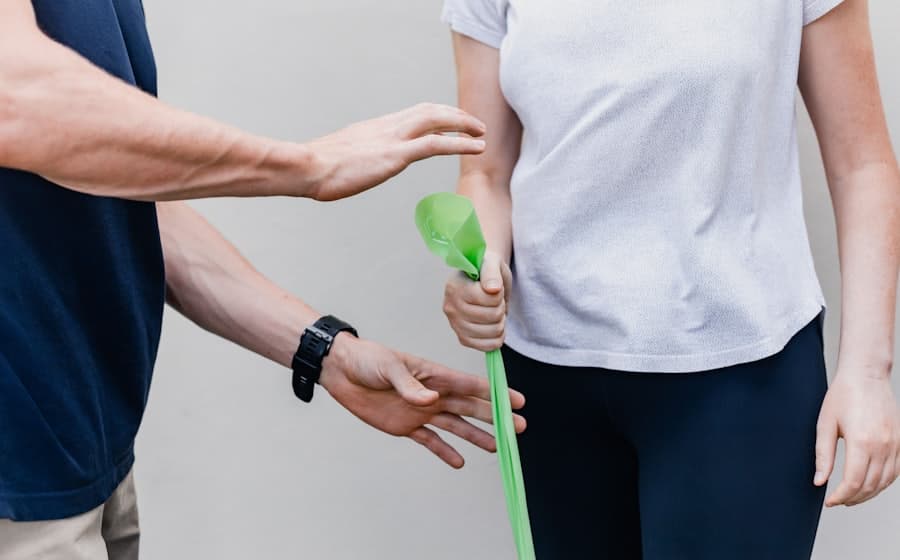
The muscles drawing the shoulder blade back and down are strengthened with a resistance band. The shoulders must not rise toward the ears; movement comes from the blade.
Lying prone with arms by the sides and squeezing the shoulder blades together is the core endurance movement. Begin with fifteen-second holds.
Back extensor endurance is worked by lifting the trunk slightly while prone. The height stays small; the target is duration, not strength.
Key points
- With a stiff back and tight chest, strengthening does not produce straightening.
- The lower back must not arch during foam roller work.
- Rotation is the direction most often lost alongside kyphosis.
- Stretching alone does not last; muscular control is needed.
- In scapular work the shoulders must not rise toward the ears.
Frequently asked questions
How long should I practise each day?
Ten to fifteen minutes regularly suffices for most patients. Consistency is markedly more effective here than one long session.
Do push-ups and chest work worsen kyphosis?
Not in a balanced programme. Training the chest while neglecting the back reinforces rounded shoulders; back and chest work should be kept in balance.
When will I see results?
A reduction in back fatigue is noticed within two to three weeks. Visible change appears in postural kyphosis within six to eight weeks, alongside measurable gains in endurance.
Related articles
- Diagnosis and symptoms· 6 min readWhat is kyphosis? Is a hunched back the same as poor posture?
- Treatment course· 6 min readKyphosis treatment: is the target the curve or endurance?
- Treatment decision· 6 min readWhich findings in kyphosis require assessment?
- Daily living· 6 min readDesk setup, phone use and sleep in kyphosis
Other topics in the same region
- Diagnosis and symptoms· 6 min readWhat is scoliosis and how is it noticed?
- Diagnosis and symptoms· 6 min readWhat is a thoracic disc herniation and what are its symptoms?
- Diagnosis and symptoms· 6 min readLocking in the upper back and pain on breathing: a facet joint problem
- Diagnosis and symptoms· 6 min readBurning between the shoulder blades: cause and meaning
Articles of a similar kind
- Exercise· 7 min readDisc herniation exercises: which help and which to avoid
- Exercise· 6 min readCervical herniation exercises: what is safe and what to avoid
- Exercise· 6 min readExercises for cervical flattening: what actually works
- Exercise· 6 min readScoliosis exercises: why one programme does not fit everyone
This content is for information only and does not replace medical diagnosis or treatment. Response to treatment varies between individuals. Please consult a healthcare professional about your symptoms.