
Upper backŞişli, Istanbul
Myofascial upper back pain treatment
The burning pain between the shoulder blades usually comes from trigger points in the rhomboids and middle trapezius. It does not show on imaging but is clearly identifiable on manual examination.
Also known as: Trigger point pain, interscapular pain, rhomboid tension
What is it?
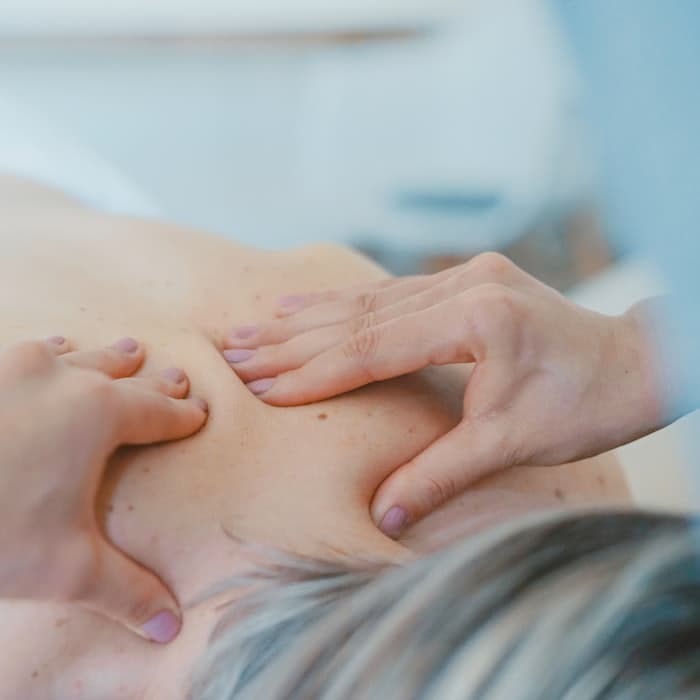
The muscles between the shoulder blades support the arms and anchor the scapula to the rib cage. When work involves reaching forward for long periods, these muscles are held under constant tension in a lengthened position. Over time hardened bands and trigger points form between the fibre bundles.
The referral pattern here is characteristic: points in the rhomboids refer along the inner border of the shoulder blade, while those in the middle trapezius refer along a line close to the spine. The pain is usually described as burning or a deep ache.
One important point: the source of interscapular pain is frequently not that region itself but the cervical spine or the shoulder joint. The assessment therefore examines not only where the pain is felt but every structure capable of referring pain there.
Symptoms
- Burning or deep aching between the shoulder blades
- Pain spreading when a specific point is pressed
- Symptoms that increase after long periods reaching forward
- A hard band palpable in the muscle
- Pain increased by reaching the arm forward or protracting the shoulder blade
- Symptoms more noticeable with stress and fatigue
- Normal imaging results
Causes and risk factors
- Prolonged reaching forward — keyboard, steering wheel, kitchen counter
- Lack of endurance in the scapular stabilisers
- Increased thoracic kyphosis with shoulders drifting forward
- Pain referred from the cervical spine
- Carrying a bag on one shoulder and other asymmetric loading
- Continuous muscle tension driven by stress
The assessment
The rhomboids, middle trapezius and levator scapulae are palpated individually to identify trigger points. The finding sought is reproduction of the pain the patient describes when the point is pressed.
The cervical spine and shoulder joint are always assessed, since interscapular pain can be referred from them and lasting results are not achieved without addressing the source. Scapular control and thoracic range are measured and working position examined.
Course of treatment
Weeks 0–2
Releasing the point
Manual pressure techniques, soft tissue work and, where indicated, dry needling are applied. Scapular movement is worked immediately afterwards.
Weeks 2–6
Scapular strength
The muscles that draw the shoulder blade back and down are strengthened. Once they engage, the rhomboids no longer have to remain under constant tension.
Weeks 6–9
Thoracic mobility
Extension and rotation range in the thoracic spine are increased. Scapular control cannot be fully established over a stiff upper back, so the two components are trained together.
Maintenance
Self-management
Self-treatment techniques with a ball or roller and working setup advice are given, allowing early intervention if a point reappears.
How long does it take?
Clear relief is expected within the first two to three sessions, with a programme of 6–10 sessions. Whether the pain stays away depends on building scapular endurance and changing the working setup.
When to see a doctor
The findings below fall outside the scope of physiotherapy and require medical assessment.
- Back pain with chest pain, breathlessness or palpitations
- Numbness or weakness travelling into the arm
- Pain with fever, weight loss or night sweats
- Pain not relieved by rest at night that wakes you from sleep
- Severe pain beginning after trauma
Frequently asked questions
Can pain between the shoulder blades be cardiac in origin?
Muscular pain changes with movement and position and can be reproduced by pressing. Pain that increases with exertion, feels like pressure or comes with breathlessness always needs medical assessment.
Is massage enough on its own?
It brings temporary relief but needs repeating. Trigger points reform unless scapular endurance improves. The lasting solution is hands-on treatment combined with exercise.
Does the pain originate from the neck?
Frequently yes. The lower cervical segments can refer pain to the interscapular region. Whether pain changes with neck movement is checked on examination, and if that is the source, treatment is directed there.
Is dry needling needed?
It is optional. It speeds things up for stubborn points that do not release manually; for patients who prefer not to, the programme reaches the same goal with hands-on treatment and exercise.
Methods used
Related conditions
Articles on this topic
Articles covering the topic in detail: symptoms, treatment, exercise and daily life.
- Diagnosis and symptoms· 6 min readBurning between the shoulder blades: cause and meaning
- Treatment course· 6 min readTreating interscapular pain: why endurance, not strength
- Exercise· 6 min readExercise for the interscapular region: from release to endurance
- Treatment decision· 6 min readWhen upper back pain does not go away: what to do next
- Daily living· 6 min readWorking setup and daily habits in interscapular pain
The content on this page is for information only and does not replace medical diagnosis or treatment. Always consult a healthcare professional about your symptoms.
Assessment appointment
No referral is required for assessment. Enquiries regarding Myofascial upper back pain treatment may be submitted via WhatsApp; available dates and times will be provided in response.