
Treatment decision6 min read
Is manual therapy safe? Who should not receive it?
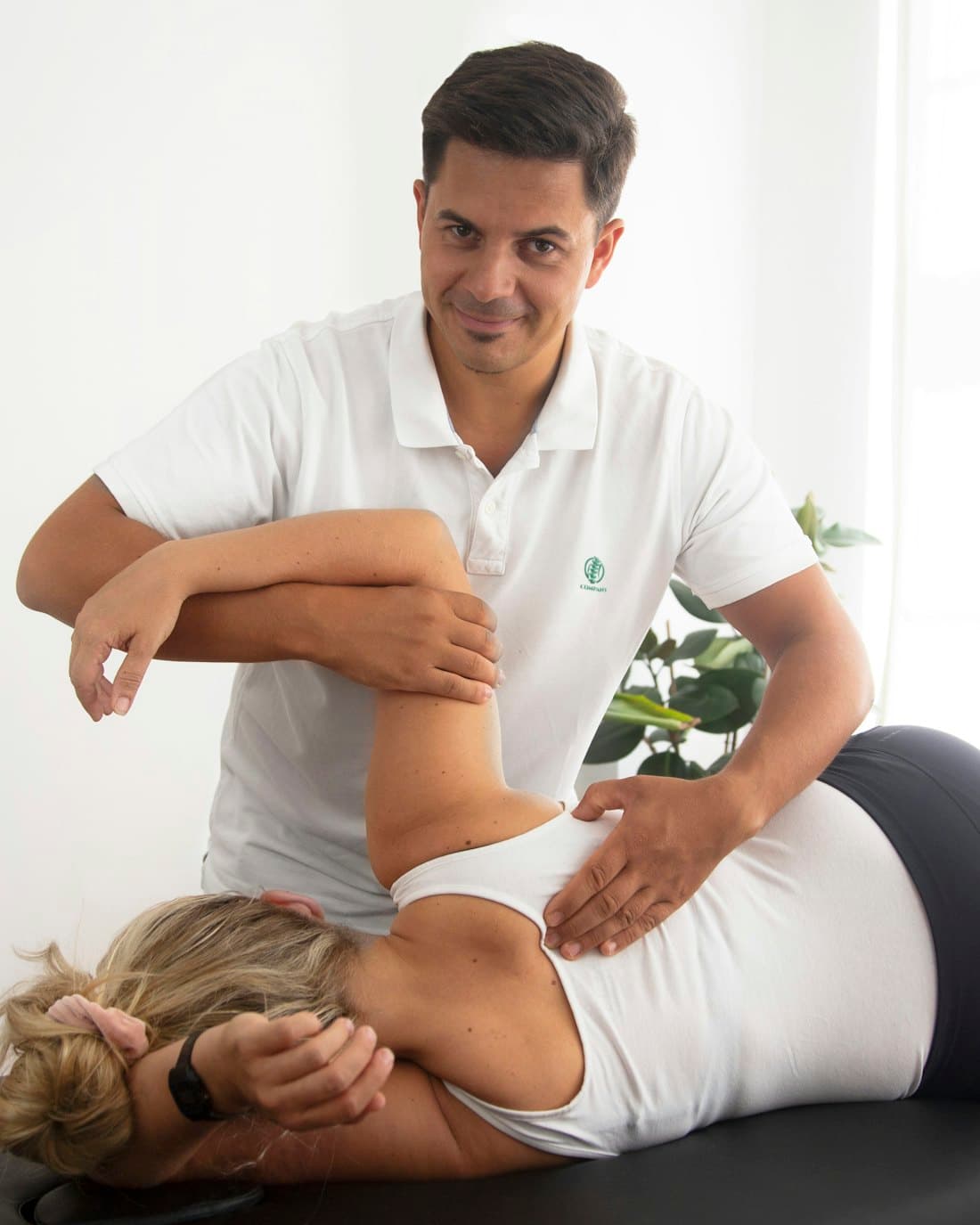
Manual therapy has a high safety profile when the right technique is applied to the right patient. The same cannot be said of every patient and every technique, however. The decision rests on detailed history and examination.
Expected response and ordinary effects
Mild tenderness and a sense of fatigue lasting a day or two after a session are normal. This is the tissue's ordinary response and usually settles on its own.
Cracking sounds during application are harmless and arise from a pressure change within the joint. They are not a marker of treatment success.
A marked increase in pain, soreness lasting more than a few days, or a new symptom falls outside the expected response and should be reported.
When it should not be applied or must be modified
Advanced osteoporosis, recent fracture, bone infection and a history of tumour directly change technique selection. High-intensity techniques are not applied in these situations.
In the neck, manipulation is not preferred in people with vascular risk factors or a history of dizziness or visual change; controlled mobilisation and exercise come to the fore.
Bleeding disorders, anticoagulant use and active inflammatory joint disease also change the intensity and selection of treatment.
What to share before a session
Medications, especially anticoagulants and steroid treatments, must be disclosed. This information directly affects technique selection.
Previous spinal surgery, fracture history, bone density results and diagnosed chronic conditions should be shared at the first session.
Pregnancy also changes the application. Manual therapy can be applied in pregnancy with suitable techniques, but position and intensity are selected accordingly.
Key points
- Applied after assessment, manual therapy is safe.
- Mild tenderness for a day or two after a session is normal.
- Cracking sounds are harmless and not a marker of success.
- Osteoporosis and a history of tumour directly change technique selection.
- Anticoagulant use must be disclosed at the first session.
Frequently asked questions
Is neck manipulation risky?
Serious events are very rare but not zero. Controlled mobilisation is therefore preferred in the neck, and high-velocity technique is not applied without screening for vascular risk factors.
Can it be applied in pregnancy?
It can be, with suitable technique and positioning. It benefits back and pelvic pain, with intensity and position adjusted to the stage of pregnancy.
What if I see no benefit after several sessions?
If there is no measurable progress in four to six sessions, the programme should be reviewed. Continuing the same application indefinitely is not appropriate; assessment is repeated and further investigation planned if needed.
Related articles
- Diagnosis and symptoms· 6 min readWhat is manual therapy and how does it differ from massage?
- Treatment course· 6 min readWhat manual therapy does for back pain
- Exercise· 6 min readExercise after manual therapy: making the gain last
- Daily living· 6 min readWhat happens in a manual therapy session? A first-session guide
Articles of a similar kind
- Treatment decision· 6 min readIs surgery necessary for a disc herniation? The criteria that decide
- Treatment decision· 6 min readIs surgery necessary for a cervical herniation? The findings that decide
- Treatment decision· 6 min readIs cervical flattening serious? When assessment is needed
- Treatment decision· 6 min readWhat criteria the surgical decision rests on in scoliosis
This content is for information only and does not replace medical diagnosis or treatment. Response to treatment varies between individuals. Please consult a healthcare professional about your symptoms.