
KneeŞişli, Istanbul
Collateral ligament injury treatment
The collateral ligaments sit on the inner and outer sides of the knee and prevent it opening sideways. Medial collateral (MCL) injuries are far more common, and most heal quickly without surgery.
Also known as: MCL injury, LCL injury, collateral ligament sprain
What is it?
The medial collateral ligament joins the thigh and shin bones on the inner side of the knee and prevents it opening inward, while the lateral collateral ligament limits opening outward. Injury usually occurs from a blow to the side of the knee or the knee being forced sideways with the foot planted.
The medial collateral ligament has an important advantage: it has a rich blood supply and therefore a high capacity to heal on its own. Most isolated MCL injuries recover completely without surgery. Lateral collateral injuries are rarer and frequently occur alongside damage to other structures.
Healing time varies with the grade of injury: two to four weeks for mild sprains, four to eight for partial tears and eight to twelve for complete tears. Early controlled movement speeds recovery, while prolonged complete immobilisation leads to joint stiffness.
Symptoms
- Pain located on the inner or outer side of the knee
- Marked tenderness over the injured area
- Pain increased when the knee is stressed sideways
- Moderate swelling, usually along the line of the ligament
- A sense of the knee giving way sideways
- Difficulty fully straightening the knee
- Insecurity with twisting and changing direction
Causes and risk factors
- A blow to the outer side of the knee, stressing the medial ligament
- The knee bending sideways with the foot planted
- Injuries in skiing, football and contact sports
- The foot slipping on a slick surface
- Weakness in the hip and gluteal muscles
- Movement control breaking down with fatigue
The assessment
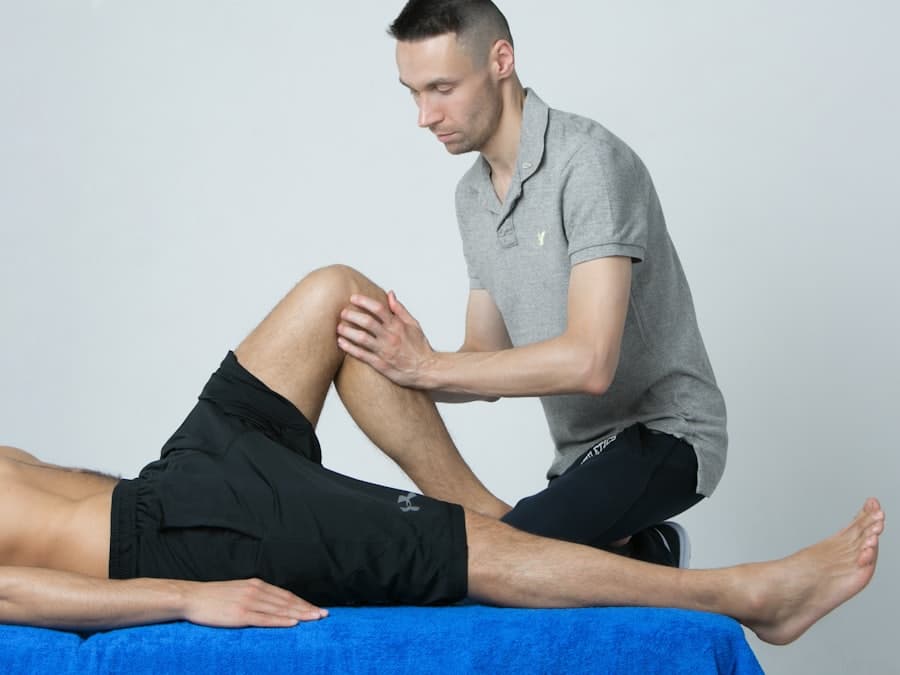
Tenderness along the line of the ligament is palpated and sideways stress tests (valgus and varus) applied. These confirm the injury and establish its grade, based on the amount of opening and the quality of the end point.
Meniscal and cruciate structures are also checked, since collateral injuries frequently do not occur alone. Range of motion, swelling and quadriceps strength are recorded. In lateral injuries the posterolateral corner structures are additionally assessed.
Course of treatment
Weeks 0–2
Protection and movement
Swelling is controlled and early movement in the pain-free range begins. Movements stressing the ligament sideways are avoided. Complete immobilisation is not advised; controlled movement speeds ligament healing.
Weeks 2–6
Strength and range
Full range of motion is restored and quadriceps, hamstring and hip strengthening progressively increased.
Weeks 6–12
Control and cutting
Balance, proprioception and single-leg control are trained, with cutting movements added progressively.
Maintenance
Return to sport
Return to sport follows once the strength difference has closed and stability tests normalise. Hip strengthening continues to reduce the risk of recurrence.
How long does it take?
Recovery is expected in two to four weeks for mild injuries, four to eight for partial tears and eight to twelve for complete tears, with a programme of 6–14 sessions. Most isolated medial collateral injuries heal completely without surgery.
When to see a doctor
The findings below fall outside the scope of physiotherapy and require medical assessment.
- Marked instability in more than one direction — possible multi-ligament injury
- Numbness, coldness or weak pulses in the leg
- Complete inability to bear weight
- Obvious deformity
- Rapidly developing large swelling
- Fever, redness and warmth
Frequently asked questions
Is it advisable to wear a brace?
In moderate and severe injuries a hinged brace can provide protection in the first weeks. Long-term use leads to muscle weakness, and a brace never replaces exercise.
Do collateral ligaments heal on their own?
The medial collateral ligament heals well thanks to its rich blood supply, and most isolated injuries need no surgery. Lateral injuries are rarer and assessed according to accompanying structures.
When is it possible to return to sport?
Criteria rather than time decide: full pain-free range, a closed strength difference between sides and normalised stability tests. Mild injuries may need three to four weeks, severe ones up to three months.
Is it possible to walk?
In most cases yes, within pain limits. Early controlled weight bearing benefits ligament healing. If you cannot bear weight, a more serious injury is possible and assessment is needed.
Methods used
Related conditions
The content on this page is for information only and does not replace medical diagnosis or treatment. Always consult a healthcare professional about your symptoms.
Assessment appointment
No referral is required for assessment. Enquiries regarding Collateral ligament injury treatment may be submitted via WhatsApp; available dates and times will be provided in response.