
Lower backŞişli, Istanbul
Lumbar disc herniation treatment
A lumbar disc herniation occurs when the outer ring of a spinal disc weakens and its inner material pushes outward. When that material presses on a nerve root, pain radiates into the leg. Most cases settle without surgery, with correct loading and exercise.
Also known as: Lumbar disc herniation, slipped disc, herniated disc
What is it?
The discs between the vertebrae act as cushions that distribute load during movement and give the spine its flexibility. Each disc has a tough outer layer of concentric fibres (the annulus fibrosus) and a gel-like core (the nucleus pulposus). Over years, repetitive loading, prolonged sitting and sudden strain create micro-tears in the outer ring. When part of the inner core is pushed out through those tears, a herniation forms.
The size of a herniation and the severity of pain often do not match. Some people with an obvious herniation on imaging have no symptoms at all, while a small protrusion can produce severe leg pain. What matters is not the size but the pressure on the nerve root and the inflammatory response in the surrounding tissue. This is why treatment decisions are based on clinical examination findings, not on the MRI image alone.
The encouraging part is that most lumbar herniations shrink over time on their own — the body reabsorbs the displaced disc material through the immune system. The role of physiotherapy is to speed that process, bring pain down to a manageable level and, most importantly, change the movement and loading habits that allowed the herniation in the first place, so it does not return.
Symptoms
- Pain radiating from the lower back into the buttock, back of the thigh and leg (sciatica)
- Pain that increases with coughing, sneezing or straining
- Numbness or pins and needles in the leg or foot
- Symptoms clearly worse with bending forward or prolonged sitting
- Morning stiffness and difficulty with the first movements of the day
- Weakness pushing onto the toes or the heel
- Pain typically one-sided and asymmetric in distribution
Causes and risk factors
- Prolonged sitting and desk-based work patterns
- Bending from the back when lifting, or carrying loads away from the body
- Lack of endurance in the trunk and hip muscles
- Sudden, unprepared twisting and bending movements
- Age-related loss of water content in the disc
- Smoking and excess weight, which impair disc nutrition
The assessment
The first appointment takes about 60 minutes. A detailed history is taken of when the pain started, which movements aggravate it and how far it travels down the leg — that information alone points strongly to the level of the affected nerve root. A posture and movement analysis follows, observing whether pain draws out of the leg and back toward the spine during forward, backward and sideways bending.
The neurological examination checks muscle strength, reflexes and sensation, and includes nerve tension tests such as the straight leg raise. Any MRI or X-ray reports you bring are read alongside these findings. If the herniation on the image does not match your symptoms, you will be told so plainly. At the end of the session the findings, the likely timeframe and the treatment plan are explained to you clearly.
Course of treatment
Weeks 0–2
Calming the pain
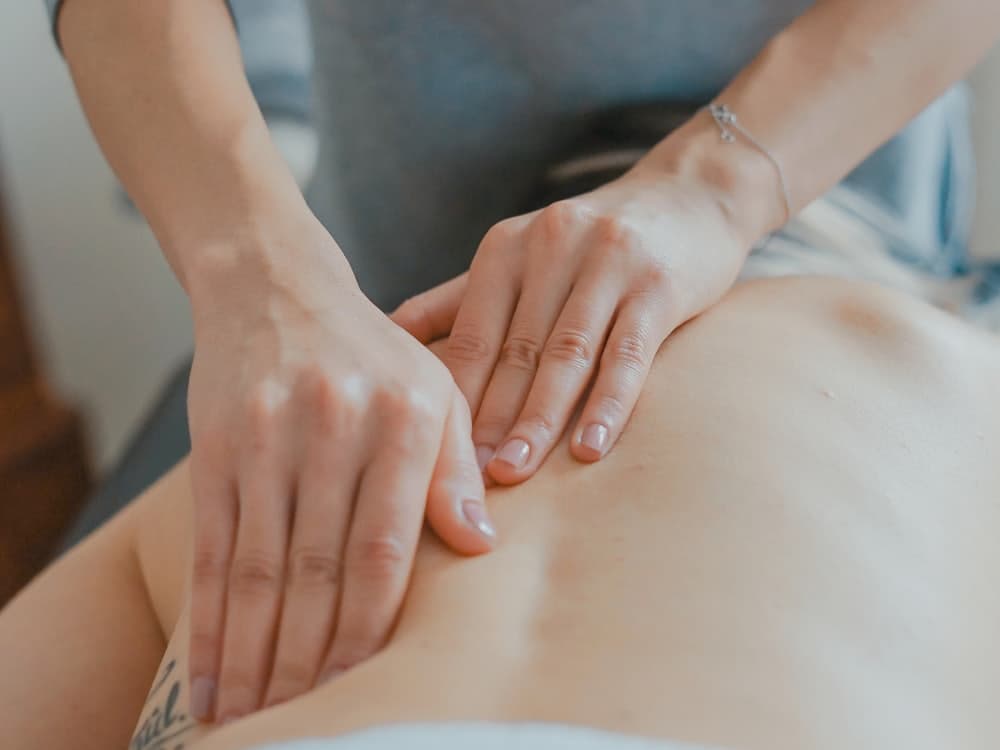
The priority is reducing irritation of the nerve root. The movement direction that draws pain out of the leg back toward the spine is identified and repeated at regular intervals through the day. Soft tissue work and gentle joint mobilisation release protective muscle guarding. Bed rest is not advised — controlled movement speeds recovery.
Weeks 2–5
Restoring movement
As pain begins to settle, hip and trunk range of motion is addressed. The timing of the deep trunk muscles (transversus abdominis, multifidus) is retrained — these stabilise the spine before movement occurs and protect the disc. Nerve gliding exercises reduce the tension referred into the leg.
Weeks 5–9
Preparing for load
The programme moves to graded strengthening: hip hinging, squat patterning and correct lifting technique. The goal is for the lower back to become resilient to the loads it meets in daily life. Complete absence of pain is not expected at this stage; the aim is progression without provoking symptoms.
Week 9 onward
Protection and maintenance
A simple home programme you can do two or three times a week keeps the gains. Your work and sporting movements are reviewed, and sitting setup, lifting technique and break rhythm are reorganised. This is the stage that most reduces the risk of recurrence.
How long does it take?
For acute lumbar herniations a programme of 8–12 sessions is usually planned, with noticeable relief beginning in the first two to three weeks. If symptoms have been present for a long time, or there is leg weakness, the process takes longer. An estimated number of sessions is given at the first assessment and updated from the measurements taken each session.
When to see a doctor
The findings below fall outside the scope of physiotherapy and require medical assessment.
- Loss of bladder or bowel control — requires emergency medical assessment
- Progressive numbness around the groin and inner thighs (saddle anaesthesia)
- Rapidly increasing, marked weakness in the leg, or foot drop
- Pain that worsens steadily at night and is not relieved by rest
- Back pain together with fever, unexplained weight loss or a history of cancer
Frequently asked questions
Is surgery necessary for a disc herniation?
No. Most lumbar herniations resolve without surgery. Surgery becomes a consideration when there are urgent findings such as progressive muscle weakness or loss of bladder and bowel control, or when properly delivered conservative treatment has produced no response after six to twelve weeks. That decision belongs to the surgeon; physiotherapy supplies the objective measurements that inform it.
Imaging shows a herniation — does this indicate surgery?
An imaging finding alone does not determine treatment. Scans of people with no pain at all frequently show disc bulges. What matters is whether the finding on the image matches your symptoms and examination results. That assessment is carried out in the first session.
Is it advisable to rest in bed?
Prolonged bed rest is not recommended — it has been shown to delay recovery and accelerate muscle loss. Short rest intervals during the most painful first days are normal, but staying active within your pain limits speeds the process markedly.
Does exercise worsen pain?
Correctly selected exercise reduces pain rather than increasing it. The movement direction that draws pain out of the leg toward the spine is identified first, and the loading is built around it. An increase in pain radiating down the leg during exercise is a stop signal, and the programme is adjusted that day.
Can a herniation come back?
It can, and the main factor determining recurrence is what happens after treatment. Stopping the exercises once the pain has gone is the most common reason for recurrence. The home programme and the lifting and sitting adjustments given in the final phase exist precisely to reduce that risk.
Methods used
Related conditions
Articles on this topic
Articles covering the topic in detail: symptoms, treatment, exercise and daily life.
- Diagnosis and symptoms· 6 min readLumbar disc herniation symptoms: which pain points to a disc?
- Treatment course· 7 min readNon-surgical treatment for a lumbar disc herniation: how the process works
- Exercise· 7 min readDisc herniation exercises: which help and which to avoid
- Treatment decision· 6 min readIs surgery necessary for a disc herniation? The criteria that decide
- Daily living· 6 min readDaily life with a disc herniation: how to sleep and how to sit
The content on this page is for information only and does not replace medical diagnosis or treatment. Always consult a healthcare professional about your symptoms.
Assessment appointment
No referral is required for assessment. Enquiries regarding Lumbar disc herniation treatment may be submitted via WhatsApp; available dates and times will be provided in response.