
Exercise6 min read
Exercise in degenerative discs: which movements are safe
Most people diagnosed with degenerative discs become wary of exercise. Disc tissue has no blood supply of its own, however, and is nourished by pressure changes during movement; immobility directly reduces that nutrition.
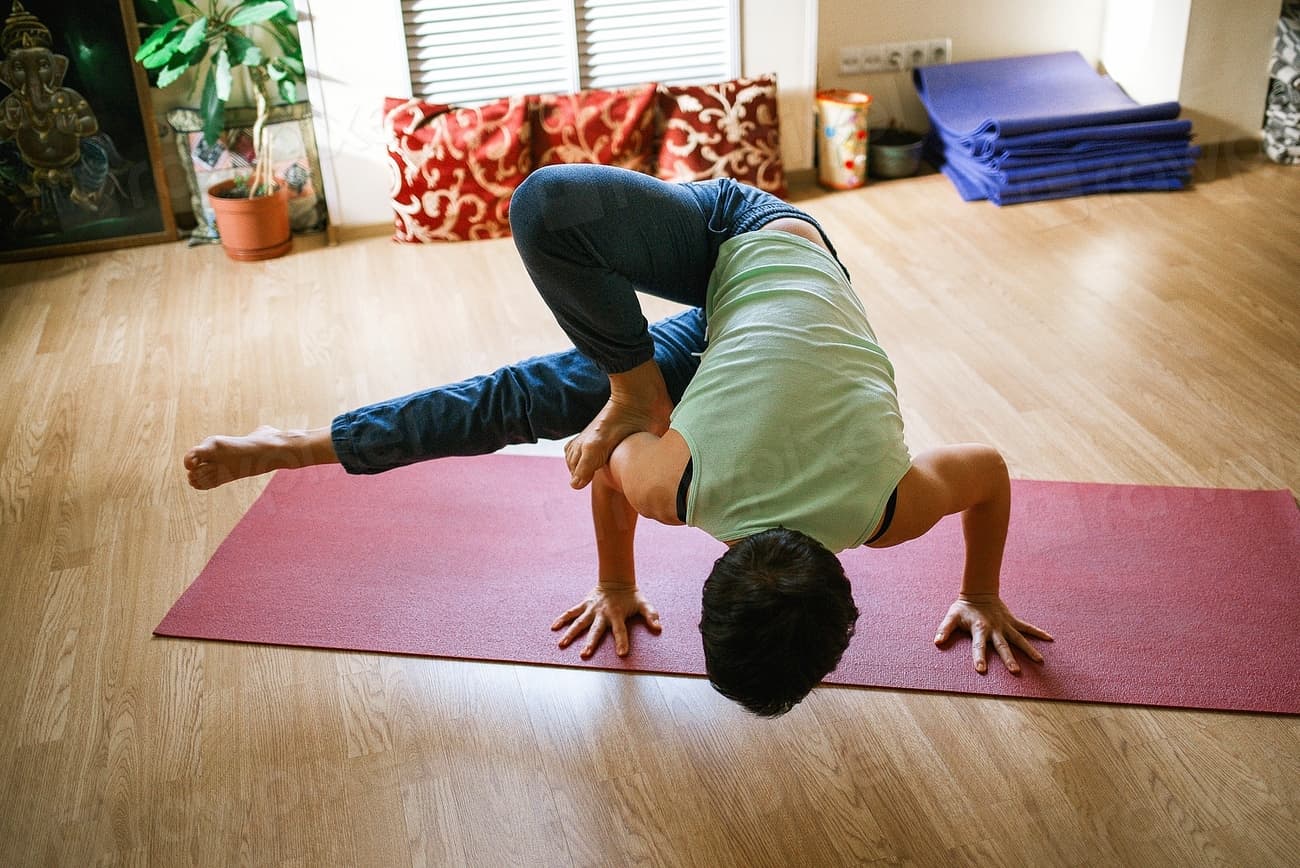
Endurance work
Isometric work targeting abdominal and back endurance is the core of the programme. These muscles stabilise the spine during movement.
The plank and side plank are suitable as long as a neutral position is held. If the lower back arches or the hips drop, shorten the hold or work from the knees.
The bird-dog teaches moving the arm and leg while holding the trunk still. It is among the best-tolerated exercises here.
Hip and mobility
Flexibility of the anterior and posterior hip groups is assessed separately. Restriction there makes the lower back take up bending.
Strengthening the posterior hip group is integral. Bridges and hip hinges shift load from the back to the hip.
Stretching is concentrated at the hip rather than the back. Excessive lumbar stretching can further load segments that are already mobile.
Safe progression
The classic sit-up applies high pressure to the lumbar discs and is not advised here. Isometric work in a neutral position is preferred.
Repeated loaded forward bending is the riskiest movement pattern. Lifting is retaught to begin at the hip.
Load is increased according to the pain response. Pain not rising markedly during exercise or the next day is the most practical sign the load is appropriate.
Key points
- Disc nutrition depends on movement; immobility is harmful.
- The plank is suitable as long as a neutral position is held.
- The bird-dog is among the best-tolerated exercises here.
- Stretching is concentrated at the hip rather than the back.
- The classic sit-up is not advised here.
Frequently asked questions
Can I do weight training?
Yes, with good technique and progressive loading. Strength work benefits this picture by increasing trunk capacity; what should be avoided is sudden, unprepared loading.
Does running damage the disc?
There is no evidence regular running damages the disc; some studies suggest regular loading supports disc health. Gradual progression is essential.
Does an inversion table help?
It can give temporary relief but evidence for lasting effect is limited. It is not advised in people with blood pressure or eye pressure problems, and does not replace trunk endurance.
Related articles
- Diagnosis and symptoms· 6 min readWhat is degenerative disc disease, and why is the name misleading?
- Treatment course· 6 min readWhat treatment targets in degenerative disc disease
- Treatment decision· 6 min readWhat 'degeneration' means in a lumbar MRI report
- Daily living· 6 min readDaily habits that affect disc health
Other topics in the same region
- Diagnosis and symptoms· 6 min readLumbar disc herniation symptoms: which pain points to a disc?
- Diagnosis and symptoms· 6 min readWhat is lumbar flattening and what does it mean on an X-ray?
- Diagnosis and symptoms· 6 min readIs back pain radiating to the buttock always a herniation?
- Diagnosis and symptoms· 6 min readSacroiliac joint pain: the point beside the tailbone
Articles of a similar kind
- Exercise· 7 min readDisc herniation exercises: which help and which to avoid
- Exercise· 6 min readCervical herniation exercises: what is safe and what to avoid
- Exercise· 6 min readExercises for cervical flattening: what actually works
- Exercise· 6 min readScoliosis exercises: why one programme does not fit everyone
This content is for information only and does not replace medical diagnosis or treatment. Response to treatment varies between individuals. Please consult a healthcare professional about your symptoms.